
Ever thought a computer could be as creative as an artist? Ian Goodfellow sparked a whole new way to look at machines by introducing GANs, which stands for Generative Adversarial Networks (basically two computer programs that compete with each other to get better). His work changed our view of computer art and even helped make deep learning, using computers that learn from data, more available to everyone.
In this article, we dive into Goodfellow’s innovative contributions. We also explore how his experiments keep sparking new ideas in the vast world of artificial intelligence.
Ian Goodfellow’s Impact on Deep Learning
Imagine a computer program that creates art almost as lifelike as something a human would make. That’s the spark of GANs, short for Generative Adversarial Networks. In 2014, Ian Goodfellow introduced this clever idea where two neural networks, which are essentially computer programs that learn by example, go head-to-head in a friendly contest. It’s like they’re teaming up in a creative game, making it easier for researchers to build models that mimic human creativity.
Goodfellow didn’t stop there. He co-wrote the essential book "Deep Learning" with Yoshua Bengio and Aaron Courville. This guide breaks down how neural networks learn tasks through backpropagation, a method that tweaks the model’s internal wiring to get better results, and convolution, a technique used to spot patterns in data (think of it as letting the computer “see” by filtering important details). Through this work, he made these complex ideas much more approachable for students and tech enthusiasts alike.
At Google Brain, his innovations boosted systems that predict and understand images, and at OpenAI, he helped fine-tune models to see data in new and exciting ways. Funny enough, before he became famous, Ian was experimenting with neural networks like tinkering with gears on an early prototype, setting the stage for his later breakthroughs. His hands-on work balancing the roles of generator and discriminator networks set a high standard for designing smart, artful AI.
Today, his research paves the way for better image synthesis and steadier training for complex models. Overall, Goodfellow’s work continues to inspire both newcomers and seasoned experts to push the boundaries of what our digital minds can do.
Generative Model Innovations: Goodfellow’s GANs Explained
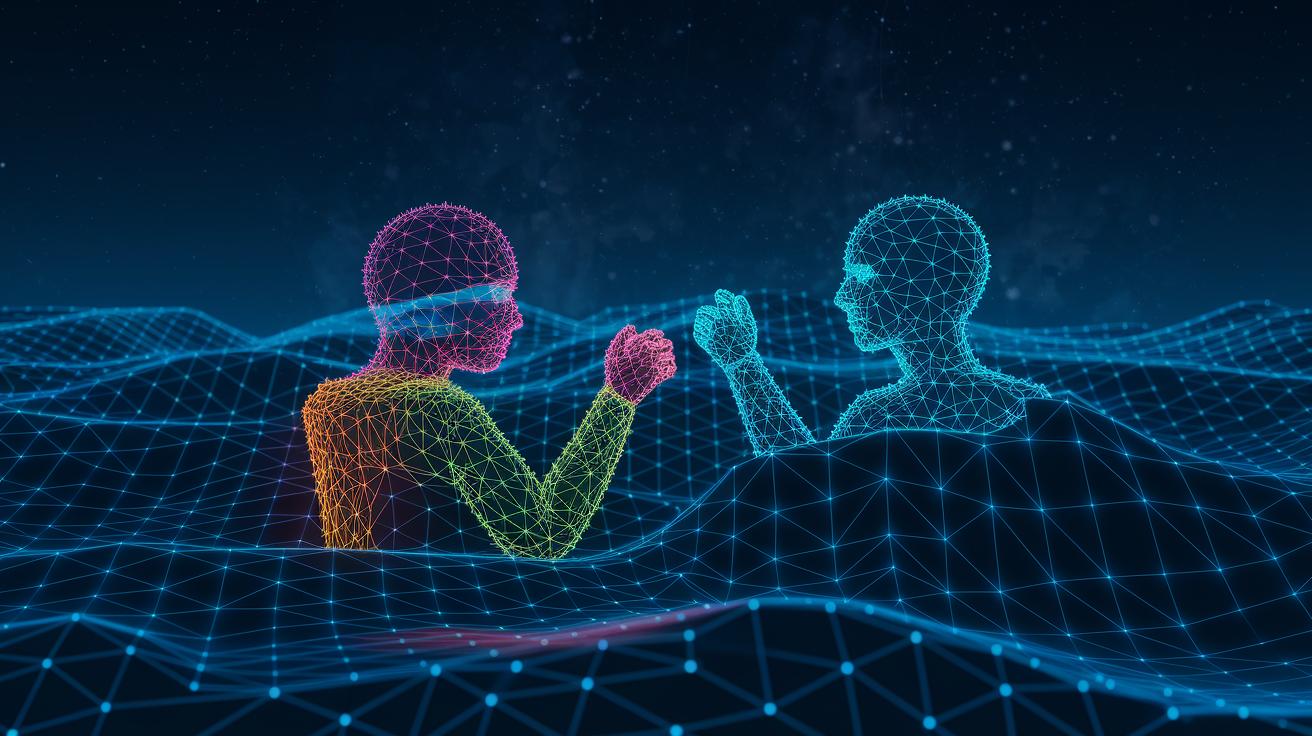
Goodfellow’s 2014 paper introduced a clever idea with two neural networks: one that creates data and another that acts as a judge. The generator produces images or patterns from random noise, while the discriminator checks if the output looks real. They essentially have a creative tug-of-war: the generator makes art from randomness and the discriminator sharpens its critic skills with each round.
Architecture Overview
In this setup, each network has its own job. The generator makes data while the discriminator decides if it’s genuine or fake. They both use loss functions, which are simple tools to measure errors, and this back-and-forth push forces the generator to produce outputs that get closer and closer to real data.
Training Challenges
Working with GANs isn’t without its bumps. For instance, the generator might fall into a pattern and keep creating similar outputs, a problem known as mode collapse. Plus, balancing the competition can be tricky and lead to unstable training. To smooth things out, techniques like batch normalization (a way to stabilize the training process) and careful learning rate tweaks are used. Cool, right?
Key Applications
GANs have opened up a lot of exciting possibilities, especially with images. They power creative tasks like style transfer, turning rough sketches into polished designs, and even boosting data sets with fresh, new samples. These breakthroughs continue to fuel innovation in AI, proving that Goodfellow’s work still sparks new ideas and exploration across many tech fields.
Critique and Influence of Goodfellow’s "Deep Learning" Textbook
Goodfellow’s textbook dives right into the heart of AI. It explores topics like backpropagation, convolutional networks, unsupervised learning, and probabilistic models. Think of backpropagation as tuning a radio, adjusting little bits until the signal is just right. This approach helps you see how small tweaks can fine-tune a neural network's overall performance.
Many readers, especially grad students, enjoy its deep dive into theory. But they also find the math pretty challenging, and the learning curve can feel steep for newcomers. Some critics even say that while the detail is great for depth, it might be a bit much if you're just starting out.
Still, its impact on AI education is clear. The mix of solid theory and practical examples has influenced countless courses, making it a go-to resource for both deep learners and those curious about how computers really learn from data.
Ian Goodfellow’s Career Trajectory: From Google Brain to OpenAI
Ian Goodfellow’s journey mixes strong academic roots with groundbreaking work in the tech world. He started out in university roles that set him up for creating new ideas in machine intelligence. At Google Brain, he dove into building generative models (think of computer programs that can create new content), pushing the limits of what AI can do. That work laid the groundwork for advances in how our brains and computers work together.
Then, he moved on to a leadership spot at OpenAI, where he steered research on making AI systems that are both smart and safe. His projects at OpenAI connect cool theoretical ideas with real-world uses. His knack for clear, top-notch communication even led him to advise young researchers to share their best code on sites like GitHub, opening up loads of new opportunities.
His shift from academia to industry shows how technical know-how meets creative leadership. It’s a journey that inspires future AI enthusiasts who want to solve problems in smart and innovative ways. Cool, right?
Shaping Future AI Research: Goodfellow’s Legacy in Deep Learning
Goodfellow’s work still echoes through the world of AI, laying down a roadmap for anyone diving into the science of machines. His clever ideas around GANs, where two models basically compete to make each other better, paved the way for methods that help systems handle unpredictable situations. Think of it like a digital artist that tweaks its own work after a quick self-review. That’s adversarial training for you.
But his impact isn’t just about algorithms. Goodfellow also pushed for a culture of sharing, which means researchers can build on each other’s breakthroughs. This spirit of collaboration has spread to areas like making neural networks easier to understand and enhancing creative design in machines. The neat balance between a model that dreams up possibilities and another that fine-tunes them has boosted not only accuracy but also sparked fresh ways of thinking about machine learning.
Today, his ideas live on in systems that scale up and take on more complex tasks. Whether in universities or industries, folks are looking at his work when they design systems ready to tackle tough, unexpected challenges. In many ways, Goodfellow’s approach is a blueprint for the next wave of smart, resilient AI innovations.
Final Words
In the action, we explored how Ian Goodfellow sparked change in deep learning. His work on GANs reshaped how we build creative AI, and his textbook changed the way many learn about neural networks. We looked at his career moves from Google Brain to OpenAI and saw how his concepts still fuel modern breakthroughs. Deep learning ian goodfellow continues to inspire robust research, pushing the boundaries of digital innovation.
These insights remind us that tech breakthroughs are built on smart ideas and bold experimentation. Embrace the excitement of progress!
FAQ
What does the deep learning book by Ian Goodfellow cover?
The deep learning book explains neural networks, backpropagation, and convolutional systems. Co-authored by Goodfellow, Bengio, and Courville, it offers a solid foundation for anyone studying modern AI methods.
How can I access the deep learning book in PDF or epub formats?
The deep learning book is available for purchase through reputable academic and publishing channels. Authorized formats include PDF and ePub, ensuring you receive a quality, complete version of the resource.
What deep learning projects on GitHub reference Ian Goodfellow?
GitHub hosts various projects inspired by Goodfellow’s work, featuring implementations of Generative Adversarial Networks (GANs) and other AI models. These projects help translate key concepts into practical coding examples.
Who is Yoshua Bengio in relation to the deep learning book?
Yoshua Bengio, a leading expert in artificial intelligence, co-authored the deep learning book. His insights, combined with those of Goodfellow and Courville, have greatly influenced education and research in deep neural networks.
How has Ian Goodfellow impacted deep learning and AI research?
Ian Goodfellow is celebrated for creating GANs, which advanced image synthesis and model optimization. His pioneering work continues to shape research trends, innovative practices, and educational approaches in AI.

