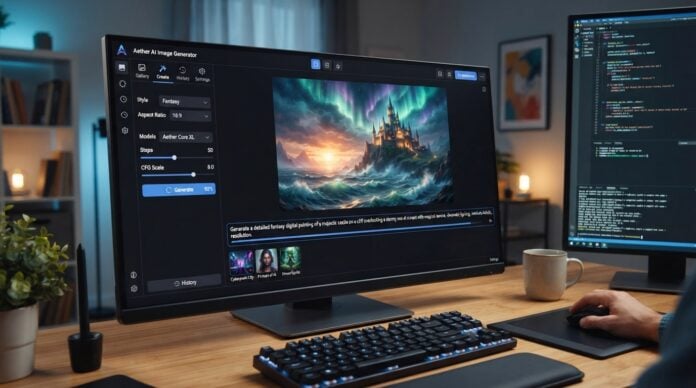
Visual content has become an essential part of communication. Whether it is a social media post, blog article, product listing, presentation, advertisement, or video thumbnail, strong imagery can make information easier to understand and more memorable. Traditionally, creating custom visuals required photography equipment, graphic design software, stock-image subscriptions, or professional designers. Today, artificial intelligence is changing that process.
AI image generation allows people to create visual concepts from simple written descriptions or reference images. Instead of searching through hundreds of stock photographs or starting every design from a blank canvas, creators can describe what they need and develop an image around that idea.
What Is AI Image Generation?
AI image generation uses machine-learning models to create images based on instructions provided by a user. These instructions are commonly called prompts. A prompt might describe a subject, environment, lighting, colour palette, composition, mood, or artistic style.
For example, someone creating an article about sustainable cities could request an image showing modern buildings surrounded by green spaces, solar panels, bicycles, and public transportation. The system interprets those instructions and produces a visual based on the requested characteristics.
Some modern tools also support image-to-image generation. In this approach, users provide an existing image as a reference and combine it with written instructions. This can help guide the composition, appearance, or general visual direction of a new creation.
The technology is particularly useful for people who have creative ideas but limited design experience.
Why Businesses and Creators Are Using AI Images
One of the biggest advantages of AI-generated visuals is speed. Producing a traditional custom image can involve planning, photography, editing, revisions, and approval. AI tools can shorten the early creative process considerably.
A marketer, for instance, might need several concepts for a campaign before deciding which direction to pursue. Generating multiple visual ideas quickly makes experimentation easier.
Content creators can also use AI imagery for:
- Blog illustrations
- Social media graphics
- YouTube thumbnails
- Presentation visuals
- Product concepts
- Advertising ideas
- Storyboards
- Digital artwork
- Website banners
- Educational materials
The goal is not always to produce the final image immediately. AI can also function as a brainstorming partner, helping creators visualise ideas that would otherwise remain difficult to communicate.
Writing Better Prompts
The quality of an AI-generated image often depends on how clearly the user explains the desired result. A short prompt such as “a city at night” leaves considerable room for interpretation.
A more detailed prompt can specify the subject, location, atmosphere, perspective, lighting, and style. For example, a creator might describe a futuristic city street at night, viewed from street level, with illuminated buildings, light rain, reflections on the pavement, and a cinematic atmosphere.
This does not mean every prompt needs to be extremely long. The important point is to provide useful visual information rather than unnecessary words.
A practical prompt structure can include:
Subject + environment + composition + lighting + mood + style
This structure gives the image-generation model clearer creative direction while leaving enough flexibility for experimentation.
Reference Images Can Improve Creative Control
Text descriptions are useful, but sometimes words cannot fully communicate the desired visual direction. A reference image can provide additional context.
For example, a fashion creator may have a particular pose or composition in mind. A reference image can help communicate that structure while the written prompt explains the desired clothing, background, lighting, or artistic treatment.
This approach can also be useful for maintaining a visual theme across multiple pieces of content. Instead of creating every image entirely from scratch, creators can use references to establish a consistent direction.
Tools such as an AI image generator can combine text-based instructions with image references, giving users additional flexibility when developing visual concepts. Depending on the workflow, generated images can also be refined through editing tools rather than treated as finished artwork immediately.
AI Images for Social Media
Social platforms are highly visual, and creators often need fresh graphics on a regular basis. Creating original visuals for every post can become time-consuming, particularly for individuals managing their own content.
AI-generated imagery can help with this challenge by providing a starting point for different campaigns and topics.
A travel creator might generate atmospheric destination concepts. A food blogger could create decorative backgrounds for recipe posts. A technology channel could develop futuristic illustrations for educational content.
However, consistency matters. Using completely different visual styles for every post can make a brand appear disconnected. Creators should establish basic guidelines for colours, composition, typography, and overall aesthetic before producing a large collection of AI-generated graphics.
Product Photography and E-Commerce
E-commerce businesses are another area where AI-generated visuals can be useful. Product presentation plays an important role in online shopping because customers cannot physically examine an item before purchasing it.
AI tools can assist with creating backgrounds, lifestyle concepts, promotional compositions, and advertising variations. A product photograph could potentially be placed into a different visual environment or used as the foundation for a marketing concept.
There is still an important distinction between creative marketing imagery and an accurate representation of the actual product. Businesses should avoid generating visuals that falsely change important product characteristics. Customers should be able to understand what they are actually purchasing.
Turning Static Images Into Video
The relationship between AI image generation and video creation is becoming increasingly close. A generated image can serve as the first frame or visual foundation for a short video.
For example, a creator could develop an illustrated landscape and then add movement, transitions, text, music, or other effects. This creates a workflow in which one visual concept can become part of a larger piece of content.
This is particularly relevant for short-form platforms, where creators frequently need visually engaging material without the resources of a traditional production studio.
The Importance of Human Editing
Despite rapid improvements in AI generation, human involvement remains important. Generated images can contain unexpected details, inconsistent objects, inaccurate text, or visual elements that do not match the creator’s original intention.
Reviewing every image before publication is therefore essential.
Simple editing can also make a significant difference. Adjusting brightness, contrast, saturation, cropping, sharpness, or composition can help an image fit its intended platform more effectively.
Rather than treating AI as a replacement for creative judgment, it can be more useful to view it as another tool in the creative process.
Consider Copyright and Usage Rules
Anyone using AI-generated imagery for commercial purposes should also pay attention to licensing and usage terms. Rules can vary between platforms, models, countries, and individual projects.
Creators should check the current terms associated with the specific tool they use and make sure their source material does not introduce additional rights issues. This is especially important when reference images contain copyrighted artwork, trademarks, recognizable people, or other protected material.
Responsible use is part of professional content creation.
What Comes Next for AI Image Creation?
AI image generation is moving visual production toward a more accessible model. Someone without advanced graphic-design skills can now experiment with concepts that previously required specialised software or professional assistance.
The technology is unlikely to eliminate the need for designers, photographers, illustrators, or creative directors. Instead, it is changing where their time can be spent. Routine visual tasks may become faster, while human professionals can concentrate more on creative direction, storytelling, branding, accuracy, and quality control.
For individual creators and businesses, the most practical approach is to combine AI generation with human creativity. Clear prompts can provide the foundation, reference images can add direction, and traditional editing can refine the final result.
As the technology continues to develop, the ability to turn an idea into a visual will become increasingly accessible. The real advantage will not simply come from generating images quickly, but from knowing what to create, why it matters, and how the finished visual supports the larger story or message.

