
Ever wondered if robots can respond in a blink? Today's factories use real-time robotics that prove they can. With ultra-fast sensors and high-speed computers (computers that process data in milliseconds), these systems keep everything running smoothly, making snap decisions to boost safety and efficiency.
We're about to dive into three robotics marvels that are transforming industrial work. Next, you'll see how these innovations are not just speeding things up but completely reshaping modern automation. Amazing.
Fundamentals of Realtime Robotics Systems
Realtime robotics need lightning-fast feedback and computing power, all in just a few milliseconds. They process sensor inputs and send out commands so quickly that they outperform any human reaction time. Imagine a system that spots obstacles in under 5 milliseconds, keeping high-speed manufacturing operations safe and on track.
Low latency control systems team up with dynamic sensor tech using tools like time-of-flight cameras (they measure distance using light's travel time) and high-speed encoders. This combo makes sure movements are precise while safety stays a top priority. Take Resolver by Realtime Robotics as an example, it uses on-demand simulations to chart out collision-free motion paths in less than 10 minutes. Pretty cool, right?
- Real-time control loop
- High-speed sensor interfaces
- On-board and edge computing nodes
- Deterministic communications (TSN, fieldbus)
- Safety interlock firmware
In the industrial world, all these components work together like a finely tuned system. Real-time control loops sync sensor data with rapid commands, making every millisecond count when conditions change. High-speed sensors paired with robust on-board and edge computing nodes ensure that crucial data gets processed without delay. And with deterministic communications, signals reliably travel between different parts of the system, while safety interlock firmware stands ready as the final safeguard. Together, they build a resilient framework that boosts production efficiency and raises safety standards in modern automation.
Realtime Robotics in Industrial Automation Environments
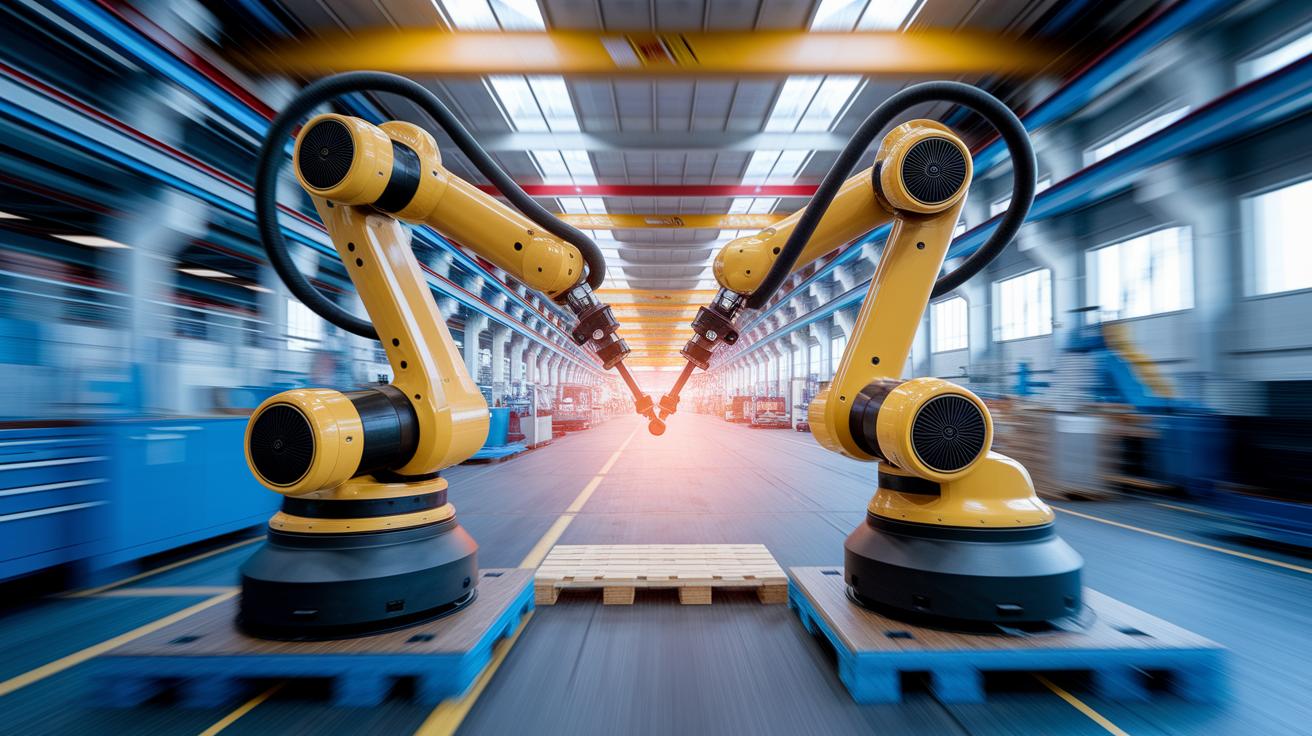
Factories can hit snags when too many robots operate at once, they might bump into each other or experience delays. Slow reactions and mixed-up signals in control systems can lead to production hold-ups and even safety issues. Even minor timing slips in fast-paced factories can upset the whole production flow, causing uneven quality and work stoppages.
Realtime Robotics tackles these problems head-on. Their motion-optimization software, teamed with Mitsubishi Electric controllers, makes sure robots work together perfectly, cutting cycle times by as much as 30%. They use OPC UA interfaces (essentially rules for connecting software programs) and Time-Sensitive Networking (tech that ensures data moves fast and on time) so that commands reach machines instantly. This approach lets robots see objects, avoid collisions, and pick up tasks with impressive speed and accuracy.
| Application | Realtime Requirement | Key Benefit |
|---|---|---|
| Multi-robot palletizing | 1 ms sync | Zero collisions |
| Automated welding | 5 ms feedback | Consistent quality |
| High-speed sorting | 2 ms command | 30% throughput gain |
These tech upgrades dramatically boost both safety and efficiency on the factory floor. Precision controllers and fast robotics not only speed up work but also help avoid costly mistakes. When factory workcells rely on solid, deterministic networks, every robot move feels like a perfectly choreographed routine.
Manufacturers now enjoy near-instant, trustworthy data that lets them make quicker, smarter decisions. This means smoother operations, less downtime, and a better return on investment. With rapid real-time robotics driving these changes, factories are set to run more efficiently, boost profits, and stay ahead in a fast-evolving industrial world.
Realtime Robotics Control Algorithms
Realtime robotics depends on smart algorithms that help machines decide almost instantly. Take Resolver’s motion planner, for example, it finds collision-free paths in under 10 milliseconds. It uses up-to-date object data and cleans out noise from sensors like encoders and cameras. This quick thinking is key for keeping multiple robots working together safely.
Model Predictive Control
Model Predictive Control helps robots predict changes and design quick, millisecond-level paths. It processes sensor readings and uses smart filtering techniques (methods that remove unnecessary signals) to keep everything on track even when the environment shifts fast. Fun fact: when a sensor spots an unexpected obstacle, the system instantly recalculates its route, ensuring smooth and secure motion.
Learning-Based Adaptive Controllers
Learning-Based Adaptive Controllers are designed to learn and adjust on the fly. They use reinforcement learning, a method where systems learn from trial and error, to handle unexpected changes in their workspace. For example, if a robot detects a slight misalignment, it quickly tweaks its path without missing a beat.
PID with Feedforward and Feedback Loops
PID with Feedforward and Feedback Loops mixes commands that predict what’s coming with real-time corrections. This combination helps eliminate small steady errors and anticipates movement needs. The result? Robots that instantly adapt during complex maneuvers, keeping operations smooth, precise, and reliable.
3 realtime robotics marvels spark rapid progress
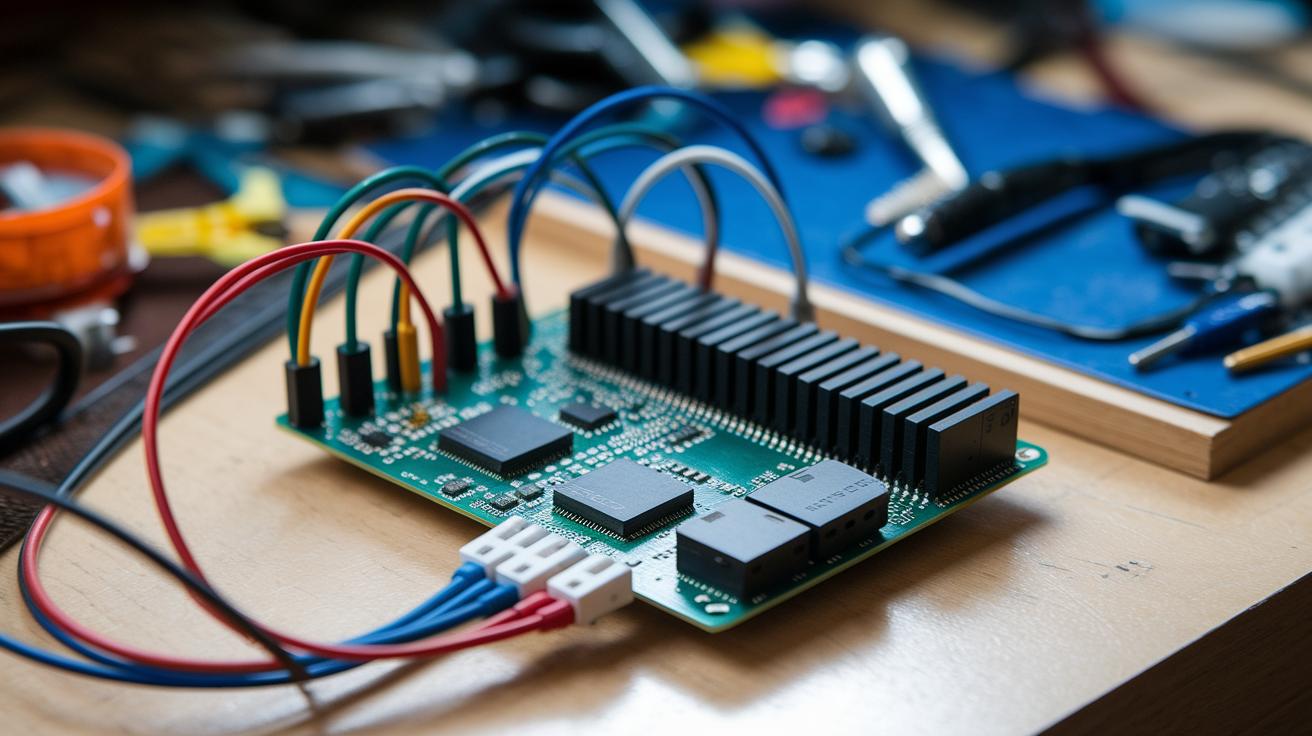
Our systems use FPGA-based controllers that work faster than you can blink. These controllers, which are special chips that can be quickly reconfigured, deliver actions in less than a millisecond, vital for smooth, error-free operations. Alongside them, smart firmware runs regular checks in real time, catches faults, and even kicks in auto-recovery when needed. Safety interlocks add another layer of protection, ensuring every quick command meets strict safety rules. It’s like having a finely tuned engine where every tiny part works together to keep everything safe and smooth.
Fast-processing sensor arrays play a big role too. By combining time-of-flight cameras (cameras that measure distance by timing light pulses) with inertial sensors (sensors that track motion and direction), they update 3D positions over 1,000 times per second. These rapid sensors feed real-time data straight to the control system. Imagine a situation where a sensor quickly spots an obstacle; this near-instant feedback lets the system react immediately, keeping operations fluid and effective.
Precision robotic arms and modern motor control take responsiveness to the next level. High-resolution encoders in these arms allow for incredibly tiny movements in less than 2 milliseconds, while well-coordinated hardware and firmware deliver ultra-responsive performance. The smooth teamwork between actuators and advanced motor control creates fast and accurate movements, making these systems perfect for demanding industrial tasks.
Realtime Robotics Deployment Case Studies
Realtime robotics is lighting up busy factory floors where real systems boost both efficiency and safety. Two standout examples show how collaborative robots tackle strict industry needs through smart software and hardware teamwork.
Mitsubishi Electric Collaboration
In this example, a flexible software solution worked wonders by coordinating robots around the clock in automotive assembly. The system was easily mapped onto existing workflows, uploading needed settings and keeping every robot in a clear, collision-free zone. Performance stats? They boasted perfect collision avoidance and faster cycle times, proving the setup was tailor-made for tough industrial demands.
Safety was a big deal too. Every connection point went through rigorous testing to match global automation standards. These tests confirmed the system could run without a hitch under hard conditions, while also giving real-time feedback so operators could quickly adjust if something went off track. This success in the automotive world hints at how such a scalable approach could work in other industries, too.
Resolver Motion-Planning Deployment
The Resolver launch set another high bar for quick deployment. Here, users simply uploaded their workcell layouts and defined operating conditions. In minutes, the simulation produced neat, optimized motion sequences, cutting the setup time almost in half. It’s a game-changer in places where every second matters and steady operations are key.
Operators quickly noticed improvements in cycle times, which boosted both production and safety. Factory teams watched in real time as the simulation adapted on the fly to new inputs, minimizing downtime. Generating collision-free paths in less than 10 minutes means production runs smoother and errors drop significantly. Both case studies show how speedy, accurate deployments of robotics systems can supercharge productivity and meet strict safety standards in fast-paced industrial settings.
Future Trends in Realtime Robotics
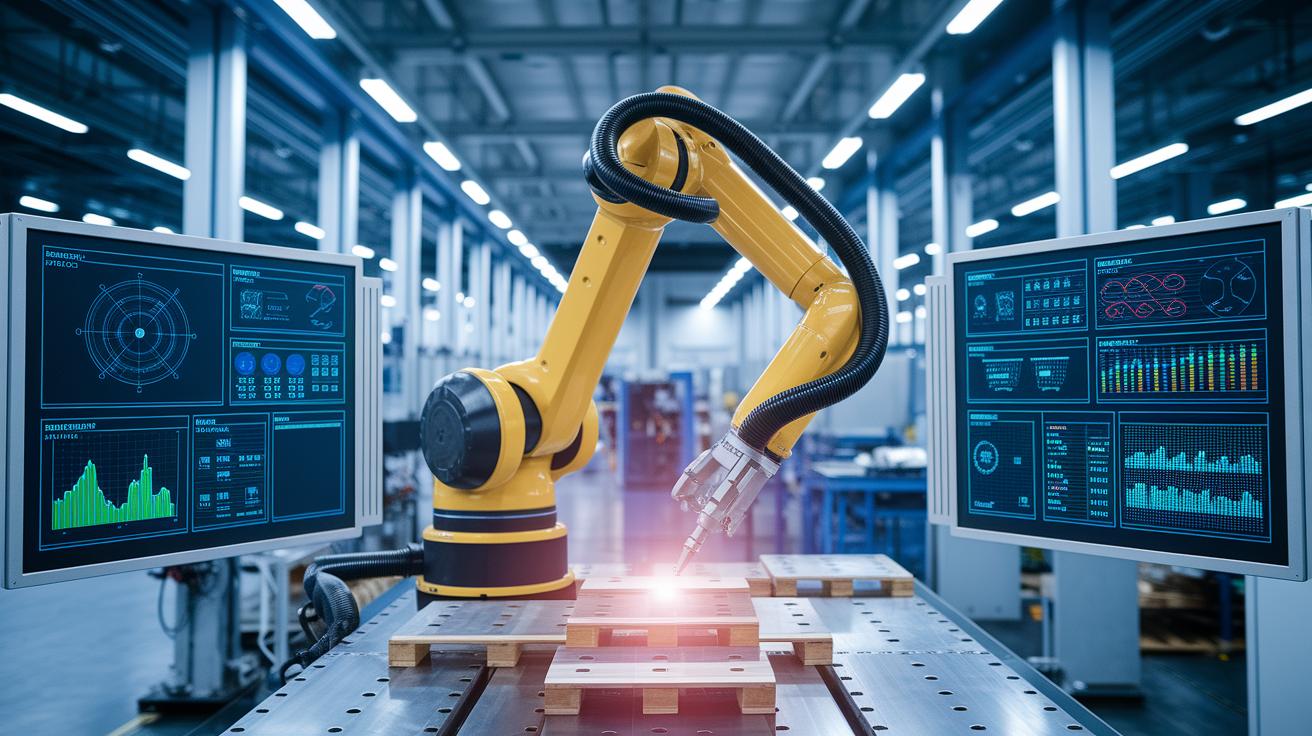
Hybrid compute is totally changing how robots work by mixing AI right into their control systems and cloud platforms. This smart combo pushes big simulation tasks to the cloud so that on-site controllers can focus on making snap decisions. Picture this: AI constantly watching over equipment, spotting issues early, and tweaking motion paths on the fly. This approach not only keeps robots super precise but also bumps up uptime by over 20% through smart, AI-powered preventive maintenance.
Next, new sensor tech and digital twin modeling are pushing robots into exciting new frontiers. Modern sensors, like event cameras and soft-touch varieties, now register feedback in less than 1 millisecond, letting machines react almost instantly. And digital twins let engineers run virtual tests, like "what if" scenarios, before actual deployment. This neat mix of cutting-edge sensors and rapid decision-making is set to make industrial operations even more accurate and efficient. Isn't it amazing how these digital breakthroughs are reshaping our world?
Final Words
In the action-packed world of realtime robotics, our discussion moved through system fundamentals to algorithm precision, hardware integration, and real-world examples. Fast control loops, high-speed sensor feeds, and adaptive commands work side by side to boost performance and safety.
Exploring these components shows how digital innovation simplifies everyday tech tasks while transforming industrial operations. Every breakthrough in realtime robotics adds a touch of practical ingenuity, leaving us excited about the tangible improvements shaping our daily work.
FAQ
What are realtime robotics careers?
Realtime robotics careers offer opportunities to work on systems that demand millisecond-level feedback, rapid command execution, and dynamic sensor integration, allowing you to innovate in cutting-edge industrial automation.
What does Realtime Robotics Resolver do?
Realtime Robotics Resolver generates collision-free motion paths in under 10 minutes using on-demand simulation, helping industrial systems achieve safe, efficient robotic operations.
Is Realtime Robotics stock publicly traded?
Realtime Robotics stock isn’t available on public markets as the company remains privately held while advancing its real-time control systems and automation technologies.
What details are known about Realtime Robotics funding?
Realtime Robotics funding backs its R&D in low latency control systems and integrated sensor technologies, fueling progress in industrial automation and real-time robotics applications.
What is Realtime Robotics Hera?
Realtime Robotics Hera appears to be part of the company’s product suite, reflecting its focus on integrated, rapid control systems; further details are available through official company updates.
How do Realtime Robotics reviews describe its performance?
Realtime Robotics reviews highlight its efficient, low-latency motion planning and rapid command execution, demonstrating effective performance improvements in industrial and automation settings.
What defines Realtime Robotics RTR AI?
Realtime Robotics RTR AI integrates adaptive algorithms with dynamic sensor inputs to deliver precise, responsive control, reinforcing its role in advancing industrial robotic applications.
Who is the founder and CEO of Realtime Robotics?
The founding CEO of Realtime Robotics is a key leader whose vision drives the company’s innovations in real-time motion planning; additional specifics may be found through direct company communications.
Who is the CEO of Real Life Robotics?
The CEO of Real Life Robotics leads their initiatives in advanced robotics integration, with limited public details available, so checking direct sources is recommended for the latest information.
Who holds the CEO position at Veo Robotics?
The CEO of Veo Robotics directs the company’s development of safe, precise automation solutions, making significant strides in industrial robotics and innovative control systems.
Which company is recognized as a top robotics company?
Realtime Robotics is recognized as a top robotics company due to its breakthrough in millisecond-level control loops, adaptive planning, and seamless integration across complex industrial environments.

