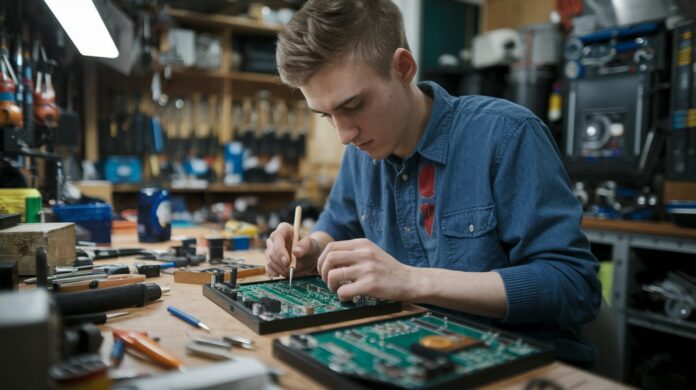
Ever wonder what makes your gadgets tick? It's all thanks to electrical engineering control systems that work in real time, constantly tweaking settings to keep things running smoothly. They operate like a smart assistant who quietly makes adjustments whenever conditions change.
These systems use live data to fine-tune everything, from the temperature to the speed, ensuring your technology stays reliable. In simpler terms, they rely on feedback loops (a process where the system checks and corrects itself) and basic models to maintain accuracy.
Stick with us as we dive into how these clever setups work behind the scenes and power the tech you depend on every day.
electrical engineering control systems Spark Technical Prowess
Electrical engineering control systems help manage processes by tweaking key settings in real time. They use live data to keep everything stable, precise, and reliable. There are two main types: open-loop systems, which work without checking the result, and closed-loop systems, which constantly review the outcome and adjust as needed. Think of an open-loop system like setting a timer on a coffee maker and not worrying if it over- or under-brews. Meanwhile, closed-loop systems keep comparing what’s happening with what should happen, making sure the process stays on track. It’s a brilliant way to ensure predictable, smooth operations.
The power of these systems comes from smart feedback loops that fine-tune performance. Engineers often use simple models, like transfer functions (basic math formulas showing how one part affects another) and block diagrams (visual maps of the process), to explain how sensors capture data, controllers compare numbers, and actuators make changes. These tools break down complex ideas into clear, manageable steps. Imagine a sensor spotting a tiny dip in temperature, it sends a signal to the controller, which then nudges the actuator to bring things back in line. It’s pretty cool to think that early industrial setups used these basic loops to maintain consistency despite changing conditions. This simple, ongoing self-correction is why electrical engineering control systems keep pushing our automation forward.
Modeling Components and Electromechanical Integration for Control Systems
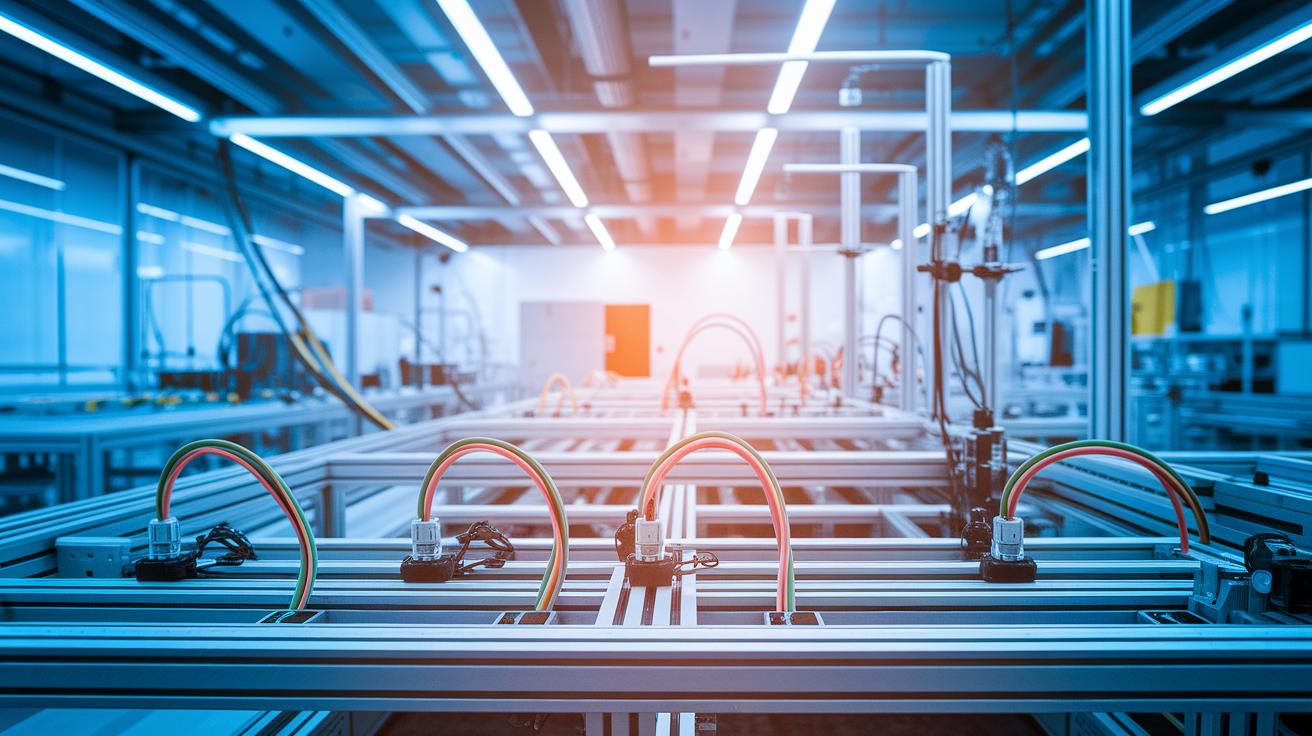
When it comes to control systems, every little part plays a huge role. Think about it: sensors grab key details like temperature, pressure, and position, giving the system the info it needs. Then, controllers use methods like PID control (that’s a way to auto-adjust settings) or state-space methods (which use math for balance) to check if things match up with what’s expected. Actuators, such as DC/AC motors and valves, jump in to make changes as soon as they get the signal.
Next, design guides also show us how to build MOSFET-based inverter circuits (MOSFETs are little switches found in electronics) and nail the best earthing practices for substations. Plus, blending mechanical and electrical techniques helps when you need to figure out short-circuit currents in low- and medium-voltage systems, ensuring everything works together smoothly.
- Sensors – for capturing temperature, pressure, and position info
- Controllers – using clear techniques like PID control and state-space methods
- Actuators – including DC/AC motors and valves that adjust operations
- Inverter circuits – built using MOSFET design guidelines
- Earthing practices – to secure substations with proper grounding
- Short-circuit calculations – following IEC standards for low and medium voltages
Choosing the right mix of these parts not only reduces errors but also makes industrial automation and energy management much smoother. Each component fits in perfectly, so if a sensor picks up even a tiny shift, the system tweaks itself right away, keeping everything on track.
Stability Analysis and Frequency Domain Design in Control Systems
Stability in control systems is fundamental for keeping things running smoothly, even when unexpected changes occur. Engineers use a bunch of methods to make sure systems react quickly, remain steady, and avoid any unwanted wobbles.
Time response analysis helps us see how fast a system ramps up, calms down, overreaches, or settles into a steady state. It’s like watching a race car accelerate and then smoothly reach its cruising speed. Meanwhile, frequency domain design gives us a peek at how a system handles different signal frequencies. It’s pretty cool how the root locus method lets designers see how the system’s key points move as they adjust the controls.
Tools like the Bode plot and Nyquist diagram are essential. They show gain and phase margins, imagine them as the system’s safety nets that predict if everything will stay in check.
| Method | Domain | Purpose |
|---|---|---|
| Routh-Hurwitz | Time | Assess characteristic-equation stability |
| Root Locus | s-Plane | Visualize closed-loop pole movement |
| Bode Plot | Frequency | Evaluate gain/phase margins |
| Nyquist | Frequency | Predict loop stability |
Each of these methods adds a piece to the puzzle, showing both strengths and potential issues before the system even goes live. It’s a bit like fine-tuning a musical instrument, you adjust the settings so that every note, or in this case, every component, works in harmony.
Engineers keep an eye on these details, tweaking the controls as needed to maintain that delicate balance between responsiveness and robust performance. In the end, stability analysis turns raw data into real-world insights, ensuring control systems perform reliably even in the toughest conditions.
PID Controller and Advanced Algorithm Development in Electrical Control

PID controllers mix three key parts: proportional, integral, and derivative. Think of it as a recipe, each ingredient is carefully measured to guide a system's response. Tuning methods like Ziegler-Nichols and Cohen-Coon set clear steps for choosing values. For example, upping the proportional gain can speed things up, but it might lead to overshooting. An overly strong integral part can slow the system down. Imagine adding too much spice to your favorite dish, it changes the flavor completely. Early engineers even found that this simple idea of PID control could transform industrial automation by providing stability in chaotic processes.
Robust techniques such as H∞ and μ-synthesis help systems adjust to changing conditions, ensuring steady performance. Adaptive algorithms fine-tune gains on the fly so everything stays on track. When it comes to digital systems, methods like Tustin convert analog behavior into digital signals. This step is tricky on microcontrollers and digital signal processors because you need that perfect translation. In essence, these advanced strategies work together to keep operations reliable, even when unexpected changes occur.
Simulation Modeling Tools and Hardware Implementation Practices
Software simulation workflows are vital when designing and testing control systems. With tools like MATLAB/Simulink, engineers can build block-diagram models that create a digital twin of their system. This lets you see how sensors, controllers, and actuators interact, pretty much like watching a live feed of your system’s bright, digital heartbeat. Using SPICE for circuit-level simulation tests PCB interfacing and checks that the signals come through clearly, much like running a dress rehearsal before the big performance.
These simulation tools let engineers forecast system behavior, spot weak points, and polish designs early on. It’s all about catching issues before any hardware is even built. And then there’s hardware-in-the-loop testing, which takes simulation one step further. By mixing in real-time processing units, HIL testing uses platforms like LabVIEW and RTOS to deploy on microcontrollers and FPGAs. This allows you to see digital controls in action under real operating conditions.
Imagine the soft hum of a well-set-up testing environment as you watch real-time data flow. This hands-on approach bridges the gap between simulation and the physical world, revealing tiny delays or glitches that a simulation might miss. In essence, with robust circuit board connections and thorough HIL tests, every design decision gets a final reality check, ensuring the product works reliably from day one.
Industrial Automation and Power System Case Studies in Control Engineering

In manufacturing plants, control systems act like the digital heartbeat of automation. They keep things running smoothly, overseeing everything from robotic welding to managing conveyor belt speeds and the careful sequencing of assembly lines. Think of it as a live concert where each instrument (or machine) plays its part perfectly. These systems rely on constant feedback loops that quickly adjust processes, ensuring that every robotic arm and sensor works together in real time.
In the realm of renewable energy, control systems are just as crucial. They handle solar-PV inverter regulation (that’s the tech that converts solar power into electricity) and balance three-phase loads, which help keep our power grids stable. Whether it’s maintaining the optimal performance of solar panels and wind turbines or managing grid fluctuations, these systems monitor energy production and flow so that clean power always matches our demand.
A standout example is the EV charging-station case study. Hybrid setups here mix photovoltaic arrays, battery storage, and grid connectivity to ensure electric vehicles get a steady charge. The control systems manage everything, from coordinating charging cycles to balancing energy inputs, making sure the entire operation runs safely and efficiently. This smart integration highlights how cutting-edge control technology can transform our everyday energy needs into something truly innovative.
Emerging Trends and Future Directions in Electrical Control Systems
AI and machine learning are injecting fresh energy into our control systems. Neural network controllers, which learn how machines work by checking real-time data, can adapt instantly, kind of like a smart motor that tweaks its own performance when its load changes a bit. And let’s talk about fuzzy logic, a flexible tool that handles unclear, non-linear situations in things like HVAC and car systems. It works almost like an experienced technician, making tiny adjustments based on feel rather than sticking strictly to math.
Networked oversight systems, driven by IoT (that’s the internet-of-things, where devices communicate with each other), are also changing the game. In smart grids, these connected systems help balance energy use, mix in renewable sources, and keep smaller grids stable. Imagine sensors and controllers chatting in real time to keep energy flowing smoothly even during high demand. In essence, blending IoT with advanced algorithms creates a lively setup that boosts energy efficiency and reliability, placing electrical control systems at the cutting edge of modern innovation.
Final Words
In the action, our article walked through the basics of electrical engineering control systems. We explored how open- and closed-loop configurations work, the role of feedback in boosting precision, and the impact of PID and robust algorithms on performance.
We also covered modeling components, simulation practices, and case studies that showcase practical applications. This blend of theory and hands-on insights brings new clarity to digital innovations and positions us to embrace emerging tech trends with confidence and excitement.
FAQ
What does electrical engineering control systems salary refer to?
The term electrical engineering control systems salary refers to the earnings of professionals working with control systems, with pay varying based on experience, industry demands, and location.
What electrical engineering control systems examples exist?
Electrical engineering control system examples include closed-loop setups like thermostatically controlled HVAC systems and automated robotic arms that adjust outputs based on sensor feedback.
What do control system and introduction to control systems PDFs offer?
Control system PDFs provide essential concepts and diagrams about managing system behavior, highlighting differences between open-loop and closed-loop designs for improved precision.
What does Control Systems Engineering encompass?
Control Systems Engineering involves designing systems that regulate processes using sensor data, feedback controllers, and actuators to maintain stability and accuracy.
What are Control Systems Engineer jobs about?
Control Systems Engineer jobs focus on developing, testing, and refining systems that automate and regulate processes in fields like manufacturing, energy, and robotics.
What is an example of an electrical control system?
An electrical control system example is a thermostat-controlled heating system that monitors temperature and uses feedback to activate a heating element for maintaining comfort levels.
What is control engineering in electrical engineering?
Control engineering in electrical engineering applies feedback principles and system design techniques to manage and adjust electronic processes, ensuring efficient and reliable operation.
What are the five basic elements of a control system and how do Types 0, 1, and 2 differ?
The five basic elements include sensors, controllers, actuators, feedback mechanisms, and signal conditioners. Type 0 has no integrator, Type 1 has one, and Type 2 has two, improving steady-state response.

