
Have you ever thought that machines might learn just like us? Deep learning is like stacking building blocks together, each layer of algorithms takes simple data and transforms it into something smart.
Imagine a puzzle where every piece makes the whole picture clearer. Neural networks, interconnected sets of algorithms that mimic the human brain, do just that. They turn raw numbers into clear, actionable decisions using methods like linear regression (a simple way to spot trends) and autoencoders (tools that automatically learn important patterns).
Ready to see how these digital breakthroughs work? Let’s dive in and explore how deep learning is reshaping our understanding of technology, one data point at a time.
Understanding Deep Learning Fundamentals
Deep learning is a branch of artificial intelligence that uses layered networks of algorithms to process data. Think of it like a chain reaction: one layer picks up simple details, and the next layer builds on that to recognize more complex patterns. It’s a step-by-step process where each level sharpens the work of the one before it.
To get deep learning, you need to feel comfortable with some basic math. You need a handle on linear algebra (you know, working with vectors and matrices), some calculus (that helps with figuring out gradients), and a bit of probability to understand how likely things are to happen. Also, automatic differentiation, which is just a fancy way to say it simplifies computing gradients, makes backpropagation a lot faster.
- Linear regression: a simple way to predict results by drawing a straight line through data.
- Softmax regression: used to turn raw scores into chances for different classes.
- Basic MLP: a straightforward multi-layer network that moves data through connected layers.
- Simple autoencoder: an algorithm that squishes data into a smaller form and then rebuilds it to learn efficient patterns.
- K-means neural clustering: a technique that groups similar data points by finding the best cluster centers over time.
Each of these tools and techniques forms the backbone of deep learning. They give us the structure and methods needed to tackle huge amounts of data and continually boost performance on complex tasks. Imagine mixing hands-on data handling with solid math, you get systems that learn and improve just like we do.
Fundamentals of Neural Networks in Deep Learning
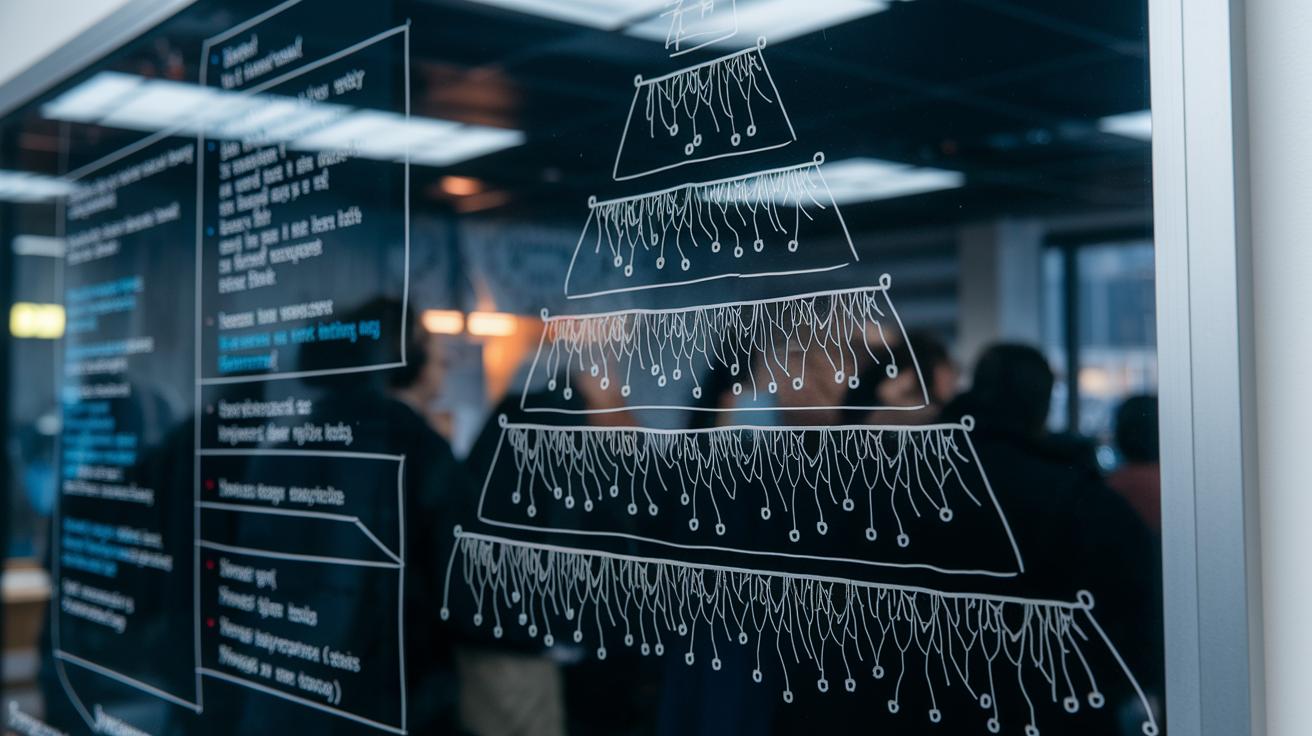
Neural networks are made up of little units called neurons that connect in layers. Each neuron takes input signals, multiplies them by set weights, adds a bias, and then passes the result through an activation function. Popular choices for these functions include ReLU (which only lets positive signals through), sigmoid (which scales numbers between 0 and 1), and tanh (which outputs numbers between -1 and 1). Think of each neuron like a mini calculator making small adjustments.
Backpropagation is the engine that powers learning in these networks. It uses the chain rule from calculus, a method for seeing how a change in one part affects another, to trace errors backward from the final output. This reverse process helps adjust weights and biases so predictions move closer to actual outcomes. Imagine tuning a guitar by listening to each note and then making small tweaks in reverse order.
Optimizers are clever algorithms that update the network's settings using the gradients from backpropagation. Among these are gradient descent, stochastic gradient descent (SGD), momentum, Adagrad, RMSProp, and Adam. On top of that, learning rate schedules help adjust how big each update step is over time. Think of it like controlling the speed of a bike going downhill to keep everything running smoothly.
Training neural networks isn't without its hurdles. Sometimes, gradients can vanish, making signals too weak, or the model might overfit, meaning it doesn't work well with new data. To overcome these challenges, techniques like careful weight initialization and dropout regularization, where some neurons are temporarily switched off, much like dimming a few LED lights, are used to keep the model robust and steady.
Deep Learning Convolutional Network Architectures
Convolutional neural networks change raw images into useful information. They use filters to spot edges, textures, and shapes, just like how you might notice the bold outlines in a drawing. Convolution applies these filters to find small, local patterns, and pooling layers then shrink the image details so the calculations run faster. Think of it like turning a detailed painting into a few broad, simple strokes.
| Architecture | Year | Key Innovation |
|---|---|---|
| LeNet | 1998 | Digit recognition with early convolution techniques |
| AlexNet | 2012 | Utilized ReLU and dropout to improve training speed and reduce overfitting |
| VGG | 2014 | Uniform use of 3×3 filters to deepen the network |
| GoogLeNet | 2014 | Introduced Inception modules for more efficient computation |
| ResNet | 2015 | Implemented residual connections to allow very deep networks |
| DenseNet | 2017 | Featured dense connectivity for enhanced feature sharing |
Every breakthrough has made it easier for networks to understand images. LeNet proved early designs were smart enough to recognize handwritten digits with surprising accuracy. AlexNet then mixed in ReLU (a quick math trick that helps models learn) and dropout (a safety net to stop overfitting), setting the stage for handling more complex visuals. VGG built on that idea by consistently using small 3×3 filters to add extra layers in a clear, organized way. GoogLeNet’s Inception modules let data travel along multiple paths at once, boosting efficiency. ResNet introduced a cool trick where information can skip over some layers to keep important details intact. DenseNet took this even further by tightly linking layers together so data flows smoothly. These smart design choices have pumped up both accuracy and speed, making image recognition systems more powerful and ready for a wide range of real-world uses.
Sequence Modeling and Recurrent Networks in Deep Learning

Recurrent neural networks handle sequences by processing data one step at a time. Imagine watching a movie where each scene builds off the last, every step adds a new layer of detail. Think of an RNN as reading a story line by line, where earlier parts shape what comes next. This method makes them a natural pick for tasks that need context over time.
Then there are GRU and LSTM units that boost basic RNNs with memory power. They fix a common issue where signals fade when processing long sequences, a problem often seen during training. And don’t forget bidirectional RNNs, they work both forward and backward, so understanding a sentence improves when you know what comes first and last. It’s like solving a puzzle by looking at the whole picture.
Next up, transformer models take things even further with attention mechanisms. With multi-head attention, the network can focus on several key parts of the input all at once. And thanks to positional encoding (which tells the model the order of the elements), it doesn’t get lost in the shuffle. Instead of reading text word by word, the model quickly spots which pieces matter most. This clever design makes transformers especially effective for understanding long-range connections in language.
Deep Learning Frameworks and Experimentation Environments
Jupyter notebooks are like a digital lab where code, math, and visuals come together in real time. You write a bit of code, run it, and instantly see your results, kind of like watching a cool science experiment unfold right before your eyes. They let you adjust settings on the fly, so you can constantly fine-tune your deep learning models just as you might tune a musical instrument until it hits the perfect note.
Big names like TensorFlow, PyTorch, Keras, MXNet, and Theano keep your work well organized. TensorFlow is awesome for diving into multi-layered models, and PyTorch adapts easily as your ideas shift and grow. Keras makes building complex networks simple with its friendly interface. MXNet and Theano, known for their strong research kick, offer fresh ways to approach your projects. Think of each one as a handy tool in your digital toolbox, ready to help you craft innovative neural architectures.
Cloud platforms like Google Colab, AWS EC2, and Amazon SageMaker give you extra muscle when training models. Google Colab is perfect for hands-on learning when you’re low on computing power. Meanwhile, AWS EC2 and Amazon SageMaker pack a punch with scalable resources, letting you choose between powerful GPUs (special chips that speed up heavy calculations) and CPUs based on what your project needs, kind of like picking the right gear for the right ride.
Optimizing and Regularizing Deep Learning Models

Picking the right optimizer can really make or break how quickly your deep learning model learns. You’ve got choices like SGD (a method for stepping through data one bit at a time), momentum, Adagrad, RMSProp, and Adam. Adam, for example, tweaks learning rates on its own during training, kind of like a smart assistant that helps your model reach solutions quicker. Plus, using learning-rate schedules can smooth things out by gradually lowering step sizes as your model gets closer to its best performance. Fun fact: many breakthrough models nailed success with just a tiny tweak to their learning schedule that saved them hours of training time.
Fine-tuning hyperparameters is just as crucial. Adjusting layers, learning rates, and batch sizes helps steer your model away from poor performance. This process is a mix of systematic testing and a bit of gut instinct, imagine tuning your car’s engine to get that perfect drive every time.
Regularization techniques keep your model in check and help prevent it from relying too much on its training data. Methods like weight decay, dropout, and batch normalization work like built-in safety nets. Picture dropout as temporarily turning off some neurons, forcing the network to build stronger, more reliable connections without leaning on just one part.
Diagnosing issues during training takes a careful, step-by-step approach. If a model either underfits or overfits, you'll want to examine things like parameter initialization and numerical stability. Engineers often run controlled experiments, similar to debugging code line by line, to make sure every part of the network contributes to a smoother, more dependable learning process.
dive into deep learning: Empowering Insights
Deep learning is changing how we see and understand pictures and videos. It helps doctors sort through scans by spotting differences between healthy images and those that might show problems. In the world of self-driving cars, it highlights people, other cars, and obstacles with neat accuracy using simple outlines. And when it comes to satellite pictures, deep learning breaks vast areas into parts like water, cities, and greenery so that areas in a picture can be quickly understood, like turning a busy city photo into a map of streets, parks, and buildings.
Deep learning is also the secret sauce behind understanding language. Social media analysis uses it to sort out if comments are positive, negative, or just neutral, so companies can react faster. It even helps translate languages and summarize long texts by grasping the meaning behind words. Picture a quick code snippet saying, "Analyzing 10,000 tweets to spot trends in customer vibes." This tells you how everyday data becomes a goldmine of insights with deep learning.
Other fields are riding the deep learning wave too. Online stores now suggest items you might love by studying your browsing habits. Even artists are using it to give their work a twist, as deep learning can transform photos into pictures that mimic the style of famous painters. All these cool features run on huge data sets and powerful cloud computers, keeping things smooth and efficient for everyone involved.
Hands-on Deep Learning Projects and Resources

New to deep learning? There are plenty of beginner courses and online platforms that make the basics easy to grasp and fun to learn. Many of these courses use interactive Jupyter notebooks (a tool that lets you write and run code directly) so you can see real data come alive with each line of code. Imagine starting a lesson that guides you step by step through building your very first neural network, with quick feedback as you adjust settings. They cover topics from simple regression to early versions of neural networks, giving you a solid foundation for hands-on projects.
Platforms like Google Colab and GitHub offer a fantastic space for coding experiments. They let you run your experiments on robust cloud services without a heavy setup getting in your way. And, with lively community forums around, you can ask questions, swap ideas, and fix issues in real time. It feels like having a conversation with fellow tech enthusiasts while you refine your models.
Project templates turn theory into practice. Picture building a CNN image classifier that helps spot everyday objects, an LSTM text generator that churns out creative sentences, or even a GAN that transforms plain images into unique pieces of art. Each template lays out suggested datasets, provides clear, step-by-step instructions, and includes handy tips for checking your results. These projects are designed to boost your confidence while demonstrating how deep learning can change the way we solve real-world problems.
Final Words
In the action, this article ran through deep learning fundamentals, neural network insights, and modern convolutional and recurrent models. We also covered core math, foundational algorithms, and practical setups with popular frameworks. The discussion embraced hands-on projects and real-world applications, all crafted to give you a clear view of the tech pulse.
Each part builds on the next, letting you dive into deep learning with confidence. Keep experimenting and exploring these concepts, you’re now better equipped to embrace tomorrow’s digital breakthroughs.
FAQ
What is the Dive into Deep Learning book?
The Dive into Deep Learning book offers a hands-on guide that explains core deep learning concepts using interactive examples and clear code implementations designed for both beginners and tech enthusiasts.
Where can I find the Dive into Deep Learning PDF, including the free download version?
The Dive into Deep Learning PDF provides a complete digital version of the book, available for free download on the official website and trusted repositories, ensuring easy access to updated deep learning content.
Who is referred to by Dive into Deep Learning Zhang?
Dive into Deep Learning Zhang alludes to Aston Zhang, one of the key contributors, whose work on the book delivers practical insights and coding examples that help illustrate deep learning fundamentals.
How can I purchase Dive into Deep Learning on Amazon?
Dive into Deep Learning on Amazon can be found either as a print version or Kindle edition through Amazon’s marketplace, offering a convenient way to own the book alongside its free online version.
Where is Dive into Deep Learning available on GitHub?
Dive into Deep Learning on GitHub refers to the open-source repository hosting the book’s code examples and interactive tutorials, making it easy for learners to clone and experiment with the material.
What distinguishes the Dive into Deep Learning PDF 2023 edition?
The Dive into Deep Learning PDF 2023 edition includes recent updates and refinements, addressing modern coding practices and contemporary deep learning approaches while maintaining its core educational value.
What discussions surround Dive into Deep Learning on Reddit?
Dive into Deep Learning on Reddit features active discussions where learners share insights, troubleshoot issues, and exchange advanced tips, making it a valuable community resource for deep learning enthusiasts.

