A typical metal fabrication plant is mostly space. Space for raw stock, space for each machine, space for parts waiting between steps, and space for the people who carry them from one station to the next. Oluseun Taiwo, founder and CEO of Solideon, thinks most of that can go.
His target is specific. Solideon wants a robot cell to replace work that normally needs about 100,000 square feet and a hundred-something people. In his words, the whole point is for robots to be able to fabricate.
Where the space goes
Making a large metal part usually takes several processes. Material is cast or printed, then machined to tolerance, then assembled with other parts, then inspected. In a conventional plant each of those steps has its own machine and its own operator, and the part travels between them.
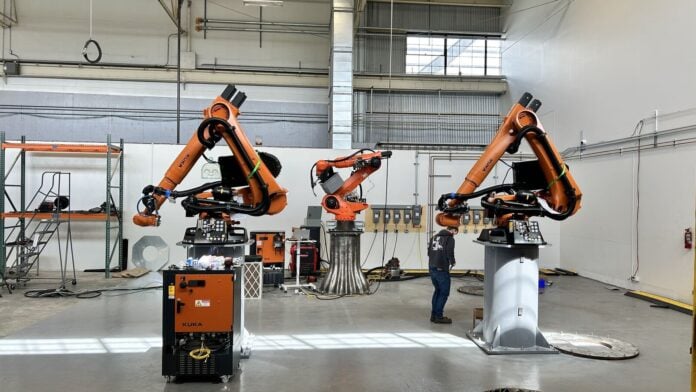
Solideon puts those steps in one place. Its software coordinates several standard industrial robot arms so that one prints metal, another machines it, others hold, assemble and check the work. The part stays where it is. The robots move around it.
What it saves
The company lists the gains it sees from that setup. It says the approach removes more than 90% of human intervention, cuts weight by up to 20% through optimized designs, and needs no traditional tooling, which it says can otherwise take four months or more.
There is a second saving that is harder to put on a spreadsheet. A plant that size has to be built near a workforce and a supply chain, and its parts then have to be shipped. A robot cell can go where the parts are needed.
Starting small
Solideon is honest about the current scale. Today its deployable systems make parts roughly the size of a bicycle component or a small car part, and the plan is to grow from there. The Air Force has backed a single-pallet version through a $1.25 million AFWERX contract, and the company says a second deployable unit is in progress, with field testing planned by the end of 2026.
The larger systems are already being put to work. In Norfolk, Virginia, Solideon Defense is making submarine hull sections and large-format defense hardware from raw stock.
Taiwo has argued that most factory floors have barely changed in decades. If the robot-cell math holds, the next one may be much smaller than the last.

