
Ever wonder if machines could spot quality issues faster than any human ever could? Imagine a robotic arm fitted with smart sensor tech, sensors that quickly pick up on tiny details, and sharp imaging that captures clear pictures in less than a second. Instead of relying on slow, manual checks, these systems work with lightning speed and precision, cutting down on errors while ramping up production. With every swift movement, these machines make the factory run smoother and more consistently. It's a vivid example of how blending robotics with quality control makes production not just faster, but smarter too.
How Automated Robotic Arm Inspection Systems Enhance Industrial Quality Control
Automated robotic arm inspection systems are real game-changers for industrial quality control. They swap out slow, manual checks for speedy, laser-focused precision. Instead of a person scrutinizing every piece by hand, these systems quickly sort parts by material, color, size, and shape, making sure only the items that meet strict imaging standards move forward. And get this, the arms inspect each part in less than a second, which means a massive boost in throughput and consistency. For example, one FANUC robot arm hit a repeatability mark of ±0.025 mm, almost making manual rechecks a thing of the past.
Under the hood, these systems team up with advanced sensor tech and high-resolution imaging, think of it as a crisp digital camera for the factory floor. They use integrated laser sensors, touch probes, and gauges (tools that capture tiny, micron-level details) to check every part with incredible accuracy. This precise imaging works hand in hand with automated fault detection that flags any anomalies in real time. The data gets analyzed immediately, allowing the system to identify and reject any parts that stray from the set quality criteria, keeping errors at bay and production standards high.
In a real-world setup, the benefits speak for themselves. One facility using a FANUC six-axis arm, with an 18 kg payload and a 1.3 m reach, saw error rates drop and waste shrink dramatically. Faster, more accurate inspections led to a notable boost in overall manufacturing efficiency and consistency. It’s a clear sign that when technology meets quality control, the results are nothing short of revolutionary.
Core Technologies Powering Automated Robotic Arm Inspection Systems
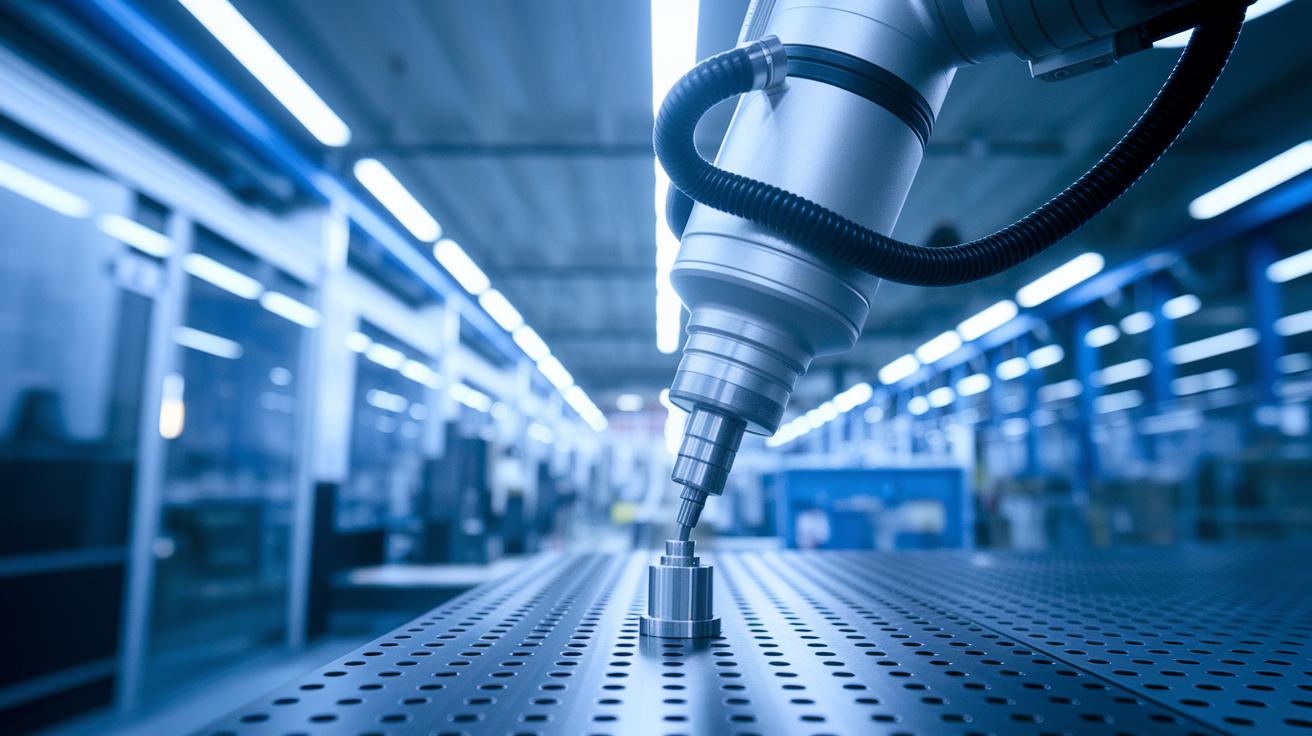
Automated robotic arm inspection systems depend on a few key tech pillars that work hand-in-hand to deliver fast, accurate quality control. Each part plays its role, using advanced imaging, smart sensors, and real-time AI support to catch even the tiniest flaws. Thanks to a mix of high-res imaging, precise sensor arrays, live AI analysis (basically, computer algorithms that learn on the fly), and solid connectivity, manufacturers enjoy ultra-consistent measurements and quick evaluations.
| Technology | Description |
|---|---|
| Vision Systems | These use high-resolution 2D/3D cameras and thermal imaging modules to capture every small detail. |
| Sensor Arrays | Precision laser sensors, touch probes, and gauges perform dimensional checks with micrometer-level accuracy. |
| AI Analytics | Machine learning techniques kick in to instantly recognize patterns and classify defects. |
| Connectivity Modules | With IIoT integration and cloud dashboard capabilities, these modules ensure live monitoring and smooth data sharing. |
All these integrated technologies team up to deliver rapid, reliable inspection imaging along with detailed analytics. This not only speeds up production but also cuts down on operational costs. It’s a smart, responsive system that redefines efficiency and paves the way for future manufacturing innovations. Isn’t it cool how tech can transform quality control?
Integration and Calibration Processes for Robotic Inspection Solutions
Begin by wiring up both mechanical and electrical systems. Engineers connect remote I/O modules (devices that relay sensor data over a network), control panels, air preparation units, and braking resistors. Motion hardware like piston-rod, guided, and rodless cylinders work alongside rotary actuators and flow controls to create precise movements. Even supporting parts, tube connectors, valve manifolds, power supplies, circuit breakers, and suction cups, fit into the system perfectly. Imagine assembling a puzzle where every piece clicks into place, creating a seamless, smart operation.
Next, zero in on calibration and validation checks. This step involves aligning vision sensors, verifying probe touch-points, and setting up strong feedback loops to ensure every sensor interface and mechanical mover meets rigorous standards. Picture a calibration technician using a laser guide (a tool that uses a focused beam of light for precise adjustments) to fine-tune sensor positions. Such careful tweaks lead to more consistent sensor data and smoother sensor fusion across the inspection system.
Performance Metrics and Cost Analysis of Robotic Arm Inspection Systems

Robotic arm inspection systems are seriously precise, they hit repeatability levels of around ±0.025 mm, and each part gets checked in under one second. Sure, setting up these systems means a higher initial spend on the robot arm, vision technology, AI training (which is basically teaching the system to spot defects automatically), and sensor arrays. But think about it: they can reduce scrap by up to 30%, cut down on costly rework, and keep quality steady every single time. Plus, they boost workplace safety by taking the load off repetitive manual checks in busy production lines.
| Cost Element | Automated System | Manual Process |
|---|---|---|
| Robot Arm | $37,000 RO1 model; cycle time < 1 sec; repeatability ±0.025 mm | High labor costs; variable precision |
| Vision System | High-resolution imaging integrated with sensors | Limited resolution; slower checks |
| AI Model Training | Real-time defect classification and automatic flaw analytics | Subjective defect assessment; higher error rates |
| Sensor Arrays | Precision laser sensors and touch probes for micron-level accuracy | Manual measurements prone to inconsistency |
| Installation & Integration | Seamless IIoT and cloud connectivity for live data monitoring | Fragmented setup; heavy dependency on manual inputs |
When you step back, it’s clear that even with the steeper initial cost, these automated systems deliver solid ROI by keeping processes consistent, lowering waste, and enhancing safety. It’s a smart move for any setup aiming for precision and efficiency in high-volume production.
Industry Applications and Use Cases for Automated Robotic Arm Inspection
In the electronics world, automated robotic arms check PCBs using precise solder inspections, solder being that metal compound that joins electronic parts. They use non-destructive testing (testing methods that don't harm the component) to find tiny flaws. This means smoother production and fewer repeat fixes. It’s like having a super sharp eye on your circuit board.
In aerospace and energy fields, these robotic arms look at turbine blades and inspect pipelines from a distance. They catch surface issues with pinpoint measurement tools and non-destructive tests. The result? Better accuracy and consistency that keeps our vital infrastructure running smoothly. Ever wonder how tech makes these big systems safer?
In medical and consumer sectors, robotic arms help with micro-precision assembly and pack items carefully. They mix high-speed imaging with digital twin simulations (a digital replica of a physical system) to monitor production in real time. This smart process boosts quality in products where every detail counts. It’s tech working hand in hand with human care.
In the sustainable energy arena, inspection systems zoom in on tiny defects in photovoltaic cells and ensure battery modules meet quality standards. Using precise measurements and remote tools, these arms spot minor irregularities. This thorough check-up tightens up the process and keeps energy output steady, like fine-tuning a well-oiled machine.
In the automotive scene, robotic arm inspections make sure parts fit just right and welds hold strong. They combine non-destructive testing with remote assessments to verify everything from chassis elements to electronic systems. This leads to safer cars and smarter production, all thanks to a bit of digital wizardry behind the scenes.
Manual vs. Automated Robotic Arm Inspection: A Comparative Analysis
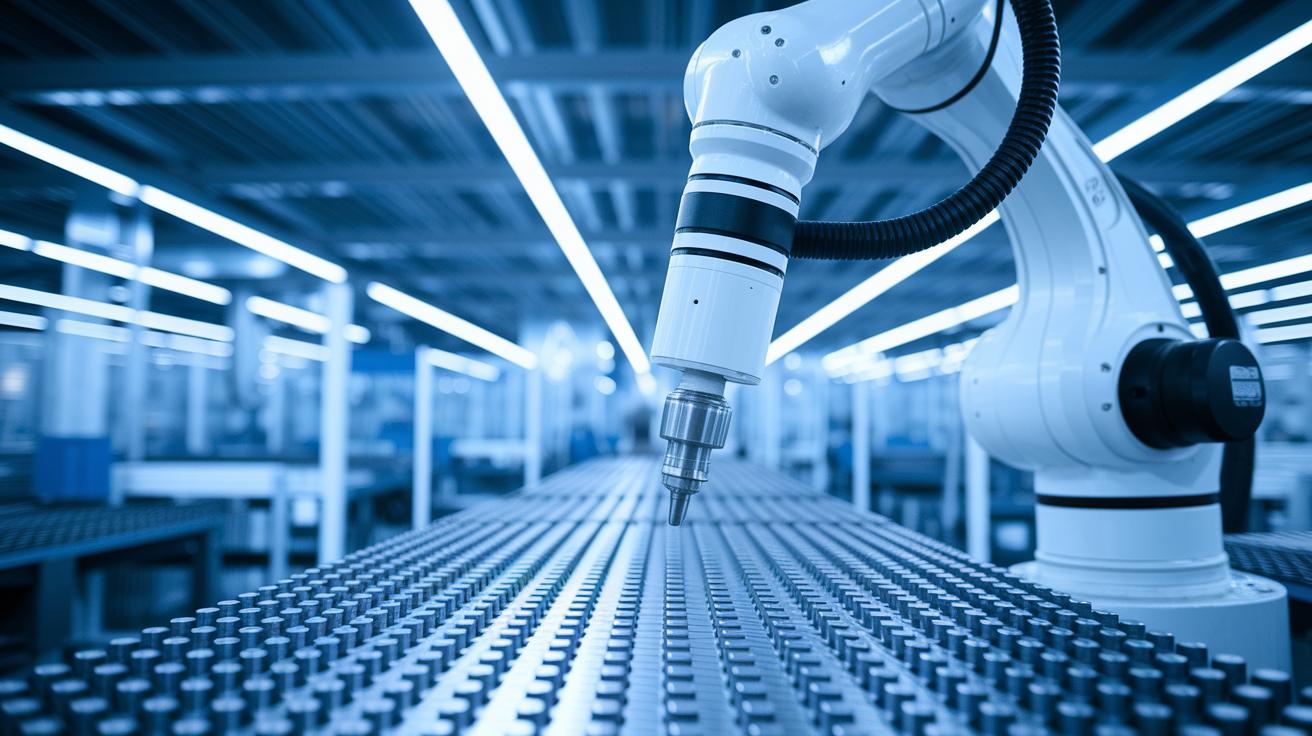
Manual inspection in electronic quality analysis is tricky. Human error can hit about 5%, and checking each part takes roughly 5 to 10 seconds. It’s tiring work, and even the best of us can miss a defect after a long day. When measurements rely on touch probes and human judgment, the results can be all over the place, which may risk the reliability of the whole production line.
Automated robotic arm inspection steps in to save the day. These systems work fast, cycling through parts in under one second, and they never get tired. They use non-contact measurement tools (meaning they don’t need to physically touch the part, which helps avoid scratches or damage) and log data automatically. This makes it easier to sort out defects and ensure precise, computer-driven quality checks.
In short, automated systems streamline the whole process. Manufacturers enjoy fewer errors and a smoother, faster production run. The performance data really shows that automation is a clear win over manual methods.
Future Trends in Automated Robotic Arm Inspection Systems
Imagine a production line where AI predicts issues before they occur. Thanks to predictive automation, inspection systems now learn from past patterns. For example, a smart system might flag a potential misalignment even before a part arrives on the assembly line. It’s like having a friendly digital guard checking for defects. This innovative method keeps production running smoothly while ensuring top-notch quality.
Next up, digital twin technology is creating full-cycle simulations. Think of it as a virtual mirror of your production process. With a digital twin, engineers can test changes without stopping the real work. It’s a bit like rehearsing a play on a mock stage so every performance is flawless. This safe testing ground helps optimize processes before any live adjustments are made.
Then, there’s the rise of collaborative robotics. Cobots, robots designed to work alongside humans, are becoming the norm. In many factories, advanced controls and real-time anomaly tracking let robots and people work side by side. Cloud-based dashboards serve as a central hub for system analytics, ensuring quality stays on point. It’s a forward-thinking blend of human intuition and machine precision that keeps our factories evolving.
Final Words
In the action, this article highlighted how robotic arms elevate speed, precision, and reliability in quality control. We examined sensor technologies, calibration steps, cost advantages, and diverse industry examples. Real-life cases and performance metrics showcased a practical shift from manual gates to smart solutions. By breaking down integration, technical details, and ROI, the benefits are clear. Embracing these automated robotic arm inspection systems makes daily tasks smoother and inspires more informed tech choices. The future shines bright for digital innovators.
FAQ
Q: What are the best automated robotic arm inspection systems?
The best automated robotic arm inspection systems combine high precision, advanced sensors, and integrated AI to speed up quality control while maintaining consistent, micron-level accuracy in industrial settings.
Q: What are automated inspection systems, and what types exist, including automated visual inspection systems?
Automated inspection systems use robotics, sensors, and vision technology to check products for flaws. They come in types like sensor-based systems and automated visual systems that detect anomalies quickly and accurately.
Q: What is an automated robotic arm?
An automated robotic arm is a mechanized system equipped with sensors, cameras, and intelligent software that performs rapid, precise inspections, reducing manual errors in quality control processes.
Q: What is robotic inspection?
Robotic inspection involves using robots fitted with imaging and sensing technologies to conduct detailed evaluations of products, ensuring high precision and repeatable results in manufacturing.
Q: How will a robot be integrated in an automated inspection system?
A robot is integrated by connecting motion controllers, sensor arrays, and AI software that work together to guide the arm’s movements and analyze data, resulting in fast, precise quality assessments.
Q: What does Hexagon Robotics offer, and what is known about its stock and humanoid robots?
Hexagon Robotics provides advanced inspection solutions, including robotic arms and humanoid robots designed for precise tasks. The company’s stock is publicly traded under a specific symbol for interested investors.
Q: What are small robotic arms?
Small robotic arms are compact, agile mechanisms designed for precise operations in tight spaces. They deliver accuracy and speed for quality control and assembly tasks in various industrial applications.

