
Ready to change your career in a hands-on way? Our automation courses let you boost your skills on your own schedule, whether you prefer self-paced online lessons or the spark of live workshops.
Think of each lesson as a little light, brightening a new path in PLC programming, robotics, and more. With a free 7-day trial and expert tips to guide you, you'll quickly see how these skills can power up your real-world performance.
This is your moment to supercharge your professional future and take bold steps forward in the digital age.
Overview of Automation Courses: Online, Offline, and Certification Paths

Learning automation is easier than ever with options designed to match your style. Online self-paced courses let you set your own rhythm, while live virtual sessions bring a burst of energy right to your screen, offering real-time chats and hands-on tips. If you prefer the buzz of a classroom, in-person workshops deliver immersive, expert-led experiences, and group enrollments add a fun, team spirit with perks like progress tracking and discounts.
With a 7-day free trial, you can dive into over 100 courses at no cost to see what fits your learning groove. Once you’re ready, a membership gives you access to more than 110 expert-led industrial automation courses and 200+ handpicked resources. These tools are crafted to help you cut unexpected downtimes and even boost repair times by nearly 25%. And with one-on-one support plus networking moments with fellow enthusiasts, you’re never alone on your learning adventure.
Courses cover key areas like:
- PLC programming
- SCADA fundamentals (SCADA stands for Supervisory Control and Data Acquisition; it's the backbone of controlling industrial systems)
- Robotics technician training
- RPA development (RPA, or Robotic Process Automation, helps software handle repetitive tasks)
- Process optimization
When you choose a course, think about your career dreams and how you learn best. If you thrive on collaboration and real-time advice, live sessions or workshops might be your ideal pick. On the other hand, if you value the freedom to learn whenever you want, online courses are a great match. Take a moment to reflect on the skills you want to gain, and set off on a path to mastering automation and carving your future success.
Technical Curriculum and Hands-On Modules in Automation Courses

Our curriculum zooms in on PLC programming, SCADA systems, robotics applications, and instrumentation. It’s loaded with hands-on lab exercises and simulation training that really shows you how things work in the real world. You’ll jump into projects like creating logic for an automatic car wash, controlling lamps with push buttons, building toggle switch logic, setting up lights that blink every 2 seconds, and running a 7-second timed bottle filling process. Each module is designed to give you practical experience with real ladder logic and virtual lab testing, so you can smoothly transition from learning to doing.
| Course Name | Duration | Prerequisites |
|---|---|---|
| Mastering Logix Applications using Factory I/O Online Course (2025) | 8 hours | Basic electrical knowledge |
| S7 PLCs – Level 1 | 4 hours | Introductory PLC Controls |
| Micro800 Applications using Factory I/O | 6 hours | Basic programming fundamentals |
| PAC Basics Extended | Multi-week | Fundamental automation concepts |
| Arduino Basics™ | 3 hours | Elementary coding skills |
In these courses, you’re encouraged to put theory into practice with hands-on ladder logic exercises. You’ll build and troubleshoot real-world projects in a simulated setting, tackling tasks like designing counter-based toggle switches, coding blinking indicators, and managing sequences in an interactive virtual lab. This mix of hands-on work with simulation-based process modeling makes complex ideas feel more accessible, almost like seeing the code come alive, and gives you a solid boost toward advancing your career.
Automation courses: Ignite Your Professional Future

When you're exploring automation courses, think about online platforms that are both flexible and packed with real-world training. Look for providers offering in-house corporate programs for bigger teams, as well as vendor-led sessions where experts from top brands like Allen Bradley (famous in industrial automation), Siemens, and Phoenix Contact share their know-how.
Some platforms, such as RealPars, make it easy by offering a single membership that supports teams of up to 150 people, they even offer group discounts when three or more sign up! Plus, you can dive into free tutorial videos or opt for more detailed, paid courses taught by industry veterans.
Here’s a quick checklist to consider:
| Cost structure | Accreditation status |
|---|---|
| Hands-on lab access | Instructor qualifications |
| Industry partnerships |
Now, match your certification track with your career goals, whether you're aiming for a future in automation engineering, process control, or RPA (Robotic Process Automation, which is about automating routine tasks). Look for courses that offer practical, real-world applications along with tools like progress tracking dashboards and one-on-one expert support.
By focusing on what matters most to you and the quality of the training, you're not just learning, you’re actively shaping a clear path toward an exciting future in industrial controls and robotics.
Practical Workshops and Laboratory Projects in Automation Courses
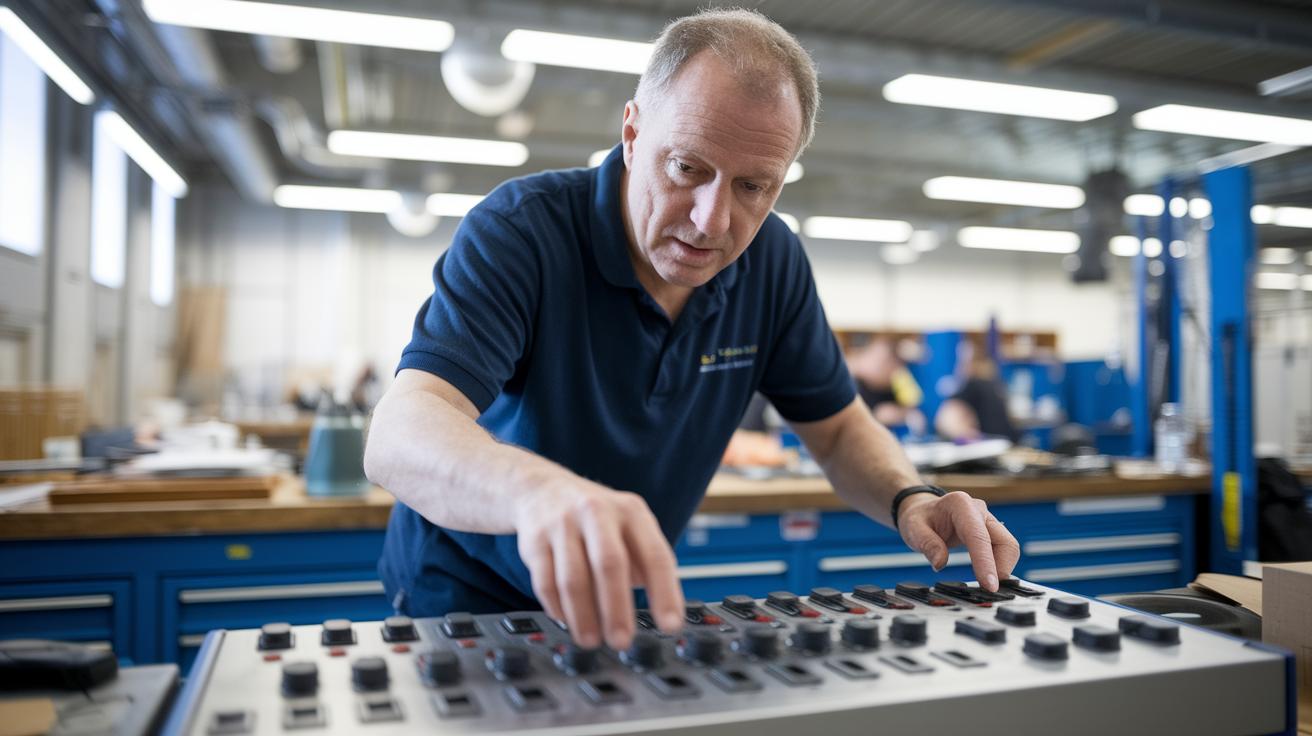
Joining our in-person workshops lets you grab hands-on experience with advanced control panels and industrial equipment. Led by a Certified Automation Specialist with 35 years of know-how, these sessions are all about diving into real, engaging activities that show off unique insights and genuine expertise.
Not near the workshop? No problem. Our virtual labs recreate a real industrial setting using smart simulation tools. (HMI stands for Human Machine Interface, which is basically the screen where you see machine operations.) Here, you can safely experiment with ladder logic, a type of automation programming, and interface control to strengthen what you learned in person.
Here are some cool projects you’ll get to try:
- Automatic car washing PLC program
- 7-second timed filler
- Push-button lamp control
- 2-second blinking light circuit
Cost, Duration, and Prerequisites for Automation Courses

Automation courses come in all shapes and sizes to match both your budget and schedule. You can start with a free 7-day trial full of handy tutorial videos or choose a subscription loaded with tons of resources and real instructor guidance. And if you're teaming up with others, signing up in groups of three or more even scores you a discount, making it a sweeter deal for everyone. Whether you’re after a quick one-hour refresher or ready for a multi-week deep dive into automated workflows, these courses are crafted to fit your time and financial needs.
To get the most out of these courses, you'll usually need a few basics under your belt:
- Electrical fundamentals
- Coding basics
- Process control concepts
- Safety standards
Before diving in, take a moment to check in with yourself. Think about your current skills and where you want your career to go. By weighing the cost, course length, and needed prerequisites, you can pick a course that really fits your background and how you like to learn. This thoughtful approach makes stepping into automation smoother and sets you up for genuine professional growth.
Automation Courses: Boosting Performance and Advancing Careers

Ever wonder how automation training can really change your work life? These courses slash unexpected downtime by 47% and speed up repairs by 23%. They’re totally in tune with Industry 4.0 trends, smart factories, robotics working alongside humans, and automated quality checks, that give you a clear competitive edge in our tech-centric world.
Here’s what you gain:
- Smoother daily operations
- Faster troubleshooting
- Credentials that employers notice
- A growing network of industry pros
- Better chances for a salary bump
With hands-on training in automation and controls, you’re setting yourself up for lasting career growth. Real customer stories and case studies show how these courses empower you to shine in roles like automation engineering, process optimization, or RPA (Robotic Process Automation, a tech that uses software robots to automate routine tasks). In essence, this practical training drives meaningful change in modern manufacturing.
Final Words
In the action, you've seen how a variety of automation courses shape the tech scene. The blog broke down course formats from online self-paced lessons to immersive hands-on workshops. It also shared insights on technical curriculum, provider comparisons, and career impact. This mix of learning paths and practical projects clears the way for a smooth digital experience. Embrace these automation courses and step confidently into a world where smart technology drives positive change.
FAQ
Frequently Asked Questions
What free automation courses online are available?
The free automation courses online include trial memberships offering access to hundreds of courses with certificates, providing a valuable starting point to explore both fundamental and advanced automation topics.
What automation courses are best suited for beginners?
The beginner automation courses focus on the basics of PLC programming, SCADA fundamentals, and essential robotics skills through hands-on projects, making them ideal for building initial expertise.
What does electrical automation training cover?
The electrical automation training covers key concepts like sensor integration, PLC operations, and instrumentation fundamentals, providing practical knowledge for applying electrical systems within automated environments.
What types of automation courses are available?
The available automation courses range from online self-paced options and virtual instructor-led sessions to in-person workshops and group enrollments, catering to various skill levels and certification needs.
What are the four types of automation?
The four types of automation include fixed systems, programmable systems, flexible systems, and integrated systems, each representing a different level of adaptability and control in automated tasks.
How do I get certified in automation?
The certification in automation is offered through structured training programs that combine hands-on labs, expert-led courses, and assessments covering popular systems like Allen Bradley and Siemens.
How can I learn automation skills?
The process of learning automation involves enrolling in structured courses, engaging in simulate-based lab projects, and utilizing free online tutorials that build practical knowledge gradually.
What platforms offer automation courses such as Coursera, Udemy, edX, LinkedIn Learning, Khan Academy, and Codecademy?
Platforms like Coursera, Udemy, edX, LinkedIn Learning, Khan Academy, and Codecademy provide diverse automation courses, ranging from free tutorials to comprehensive, paid programs designed for various learning styles.

